What's Up with Upgrades?

It seems like this is the third year in a row that sometime in March we have really weird H.261/263/264 dialing conflicts. We upgrade software, and all of a sudden bridges are crashing, sites just ring & ring and won’t negotiate, and one site can take down the whole conference. Is it just me or is this happening to you too?

When you do a lot of connections with multiple vendors’ units involved in the call, once in a while you get caught in between upgrades. The upgrade of one vendor breaks the connections with another vendor and they haven’t fixed it in their latest version yet. Has this happened to you?

It seems like it’s never a good idea to upgrade anything in the middle of the school year. However, sometimes we want to upgrade to fix a problem. It seems like a no-win situation.

That’s my rant for today! 🙂 Do you have any words of wisdom? Please comment!

MysteryQuest Europe Notes

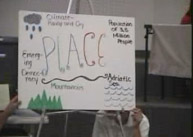
Today I am running the last MysteryQuest World for this school year. We’re focusing on Europe and have 3 classes from TX, one from OH and one from MI.

After a rough start with technical difficulties for three of the schools, we got right into the presentations. Several of the schools were participating for their first time. The most unique presentation today was from Mata Intermediate in Alief, TX.  They used an investigative interview format. A student was investigating the disappearance of a person who had committed a crime. Each MysteryQuestperson who was interviewed (wife, mother in law, father in law etc) shared the clues. Then they showed a poster. While we looked at poster, the interviewer repeated the clues again. “So you said, ….” and this gave the students a way to hear the clues again and get them written down.  This format worked really well and was quite funny to watch. The student interviewing had a fancy hat and pipe and acted very aggressive. It was a very entertaining presentation.


In the clarifying questions section today we had some interesting questions:

  • Does ya’lls city start with an e? I can tell we have a group of TX schools this time! 🙂
  • Is the city known as the city of a 1000 windows? These are the kinds of clarifying questions I really like!

Great job to all the classes that participated this year. Stay tuned for news from MysteryQuest USA coming up in April and May!

Microsoft $300 Videoconference System?

Reading my VCInsight news and found this announcement from the March 17 issue:

At VoiceCon Orlando 2008 this week, Microsoft Corp. announced broad availability of its conferencing solutions and continued customer and partner adoption of its Unified Communications platform. Polycom and TANDBERG videoconferencing systems (74% of the installed base of room systems) will work with Microsoft Office Communications Server 2007 and Microsoft Office Communicator 2007. In a keynote address, Microsoft revealed that it has plans for the OCS Server to handle High Definition video and that the company is developing a HD videoconferencing camera with TANDBERG, priced for the masses at $300.

This sounds really intriguing. It sounds like a desktop type unit, but I wonder if it would have audio that could work in a classroom?  It sounds like it might require the OCS server, which might be a complication for schools. Still, it’s nice to know the vendors are competing over a low cost videoconference system, which should continue to benefit K12 education.

Elevate 2008 Schedule

Did you know the Elevate 2008 draft schedule is posted now? I can see already that it’s going to be a great conference. I hope to see you there! Here are some features I’m looking forward to:

  • Optional daily hikes, right during my usual exercise schedule. Should be fun! Bring your hiking boots!
  • Afternoon Nutrition break and networking. Doesn’t that sound fun?!
  • Live VC demonstration from educational content provider. I wonder which providers they will be featuring. I hope I can see a new one.
  • VC Showcase demonstrations and displays. I’m sure I’ll be blogging up a storm with all the new learning at the showcases!
  • Two great preconference workshops on Sunday for a cheap $25! How will I choose which one to attend?

Check out the schedule and get your passport soon!! Banff is going to be gorgeous in August! Can’t wait!!

Blog Anniversary & Passion Quilt Meme

I can talk to anyone!

To celebrate my 3rd blog anniversary, I thought I’d finally respond to Gail Desler’s tag for a passion quilt meme. I’ve been thinking about it for a while, so this is the result of simmering.

My passion, as you well know, is bringing engaging experiences to students, generally via the technology of videoconferencing. I want students to know and believe that they can talk to and learn from anyone! I guess the quilt idea got in my head too so I wanted more of a collage. The collage includes videoconferences with a blind author, children’s author, World War II veterans, Iditarod racer, students in Benton Harbor, MI, Wales, and Pakistan, a rattlesnake and a caterpillar. The girl in the center is one of my favorite student pictures from Microsoft Clip Art.

Ok, so here’s the rest of the meme information:

Rules:

  • Think about what you are passionate about teaching your students.
  • Post a picture from a source like FlickrCC or Flickr Creative Commons or make/take your own that captures what YOU are most passionate about for kids to learn about…and give your picture a short title.
  • Title your blog post “Meme: Passion Quilt” and link back to this blog entry.
  • Include links to 5 folks in your professional learning network or whom you follow on Twitter/Pownce

And I’m tagging Roxanne, Kevin, Rebecca, Andrea, and Ashton.

Finally, in honor of my blog anniversary, thank you to each of you, my readers, who share, comment, pass the word, send me resources, and in general nudge me to keep learning! If you want to take a stroll down memory lane, wander through some Selected Posts.

MysteryQuest Miracle

I’ve been flat on my back sick all week, but on Tuesday we had a small miracle.

I had a MysteryQuest Western Hemisphere session scheduled with 5 classes, and I was too sick to crawl out of bed, let alone facilitate. All weekend prior, I had wracked my brain trying to think of what to do. I can’t bear to cancel a MysteryQuest because they are almost impossible to reschedule.

Then it hit me, all the teachers had done MQ before! They could just dial in and run it themselves.

I know, whoever heard of that? Five rowdy middle school classrooms on a multipoint with no facilitator?

But, they did it! Four amazing teachers and one great MysteryQuest. I am so proud of these teachers:

  • Classroom A Teacher: Annette Rozycki, O.W. Best Middle School, Dearborn, MI
  • Classroom B Teacher: Debbie Fucoloro, St. Clement School, Archdiocese of St. Louis, Des Peres, MO
  • Classroom C Teacher: Jeff Gaynor, Ann Arbor, MI
  • Classroom D Teacher: Laura Ponsart, Gilles-Sweet, Fairview Park City Schools, Fairview Park, Ohio
  • Classroom E Teacher: Jeff Gaynor, Ann Arbor, MI

And afterwards, they all emailed each other sharing congratulations on a  job well done. Thank you, teachers & techs, for making another great experience possible so we wouldn’t have to disappoint students by canceling the session!

Listening to Teachers

Listening
On a slightly off-videoconferencing topic…. I’ve been teaching an online class, Technology in the Early Elementary Classroom, the last 8 weeks. I love listening to the teachers discuss, create projects, and sharing great ideas with each other. This week there was a discussion of the use of the overhead projector. Kindergarten and 1st grade teachers talked about how students went crazy over it when they first saw it. New to them! And how it helped them follow along in using their math books, etc.

I thought about the tech coordinators I’ve heard wanting to get rid of all the overhead projectors in their school and replace with [insert preferred technology here].

And I wondered, how often do we really stop and listen to the teachers? How often do we observe how they are actually using the tools in their classroom (without judging teaching philosophy or strategy)? How often do we think carefully about how teachers will still do their great work minus a tool we’re tired of? Do we really listen and hear the potential impact of technology decisions on teachers?

——

One of the ways I want to listen to my teachers this year is to do a little end of the year survey. Actually two surveys. I’ll send the Zoomerang links to my regular VC listserv for my teachers, with a link for if you did a VC this year, and if you didn’t. I want to ask them some questions. To see how we can serve them better.

How are you listening to the teachers you serve?

Reading Around the Planet with Wales

One of my schools had conflicts with the scheduled Read Around the Planet dates this year, so I helped them find partners later in March. Our first connections were this week, and more are scheduled next week.

Today’s session is one of three that we scheduled with Wales. We’ve been working on several collaborations with Wales.

Our class is first grade, and their students are close to the equivalent to 3rd and 4th grade students.

08-03-14wales.jpgOur class started with a song about sounds and words that have those sounds. Then the students shared a story called Lazy Mary. The class read the story together and two students acted it out.

The class in Wales had different groups talk about various components of Welsh culture.

Their students asked our students, “Where is Wales?” our kids said, England! One of the things that I’ve learned as we do more connections with the United Kingdom is that there is a perception in the U.S. that the UK is the same as England. Whereas people from Wales and Scotland really don’t appreciate that! I’m not sure that this misconception actually got cleared up in the session today. I don’t know what it would take to clear this up, but I think probably when we connect to schools in Wales and Scotland we need a map and an explanation of where England is compared to where they are. When I first started to understand this confusion, I had to look it up online to get a grasp of the situation. It’s certainly confusing on this side of the Atlantic!

Here are some examples of the questions the students asked each other.

  • 08-03-14wales2.jpgAre you actually by Lake Michigan?
  • What is the weather there?
  • What time is it there?
  • Do you have uniforms?
  • What subjects do you learn?
  • How many students are in your school?
  • What’s the coolest thing about your culture?
  • What TV shows and movies do you like? Simpsons and SpongeBob on both sides of the Atlantic!
  • What kinds of foods do you eat?

It was a great connection and hopefully we’ll continue our collaboration with Wales.

Interviewing World War II Veterans

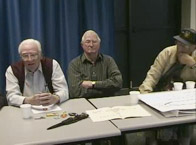
08-03-13veterans1.jpgThis afternoon I spent another hour with our World War II veterans and three classes as part of our Lest We Forget series. While we get less questions in with a panel format, I think the varied perspective from the different branches of the military, as well as both the Pacific and European fronts, provides a broader understanding to our students. I also like the interaction among the veterans as they share their stories. I think the pictures I captured today give you a little of the idea.
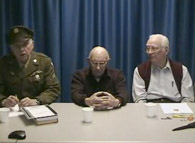
Here’s a sampling of the questions from the students today:

  • What was your first day in the service like?
  • 08-03-13veterans2.jpgI’ve read a lot about General Patton. I know many men admired him. How did you feel about him and the men you served under?
  • Before Pearl Harbor we were neutral. Do you think we should have gotten involved earlier? This was a misconception that our veterans clarified for the students. One of our veterans helped prepare supplies for the war before Pearl Harbor.
  • Do you think we were prepared for the war when we entered it?
  • I’m sure you were sad when your friends were dying. How did you feel when your enemies were dying?
  • What was your reaction when you heard about Germany’s surrender?
  • What was your favorite part of the service? Coming home! You should have seen them all light up with smiles at this question!
  • What weapon do you think was the most influential in the war?
  • Do you think the film Pearl Harbor is historically accurate?
  • What were the living conditions like during the war? One of our veterans has a story of how the kangaroos knocked over their tents at night in Australia.
  • What kept you going through the war?

Each session with our World War II veterans is more poignant than the last. After the session, we reminisced about one of the panel members who is no longer with us. It was hard to say goodbye, wondering who would be missing at our next session in December. Yet they appreciate the opportunity, and so do the students. It’s so important to keep telling these stories. The veterans are grateful for young people’s interest in history.

What is the Western Hemisphere?

Have you ever noticed how videoconferencing expands your thinking? How you learn new things every day, even if you’re just hooking up classes to the next place and making sure the connection works?

This week I realized even this even more. I noticed how VCing makes you more aware of how other people define things differently than you might…

We’ve been running MysteryQuest World Geography since 2002. One of the areas of the world we focus on is the Western Hemisphere. I’ve always thought of it as my local teachers do also – that it’s basically North, Central, and South America. Which is also how our textbooks and curriculum seem to define it.

But when the second Canadian teacher submitted the country for Western Hemisphere that wasn’t in one of those areas, I decided I’d better learn some more. So I asked Google and found this from Wikipedia (emphasis mine):

The Western Hemisphere, also Western hemisphere[1] or western hemisphere,[2] is a geographical term for the half of the Earth that lies westPrime Meridian (which crosses Greenwich in London, England, United Kingdom) and east of the International Date Line.[3] It is also used, mainly by Americans, to specifically refer to the Americas (or the New World) and adjacent waters, while excluding other territories that lie geographically in the hemisphere (parts of Africa, Europe, Antarctica, and Asia). Thus this is sometimes referred to as the of the American hemisphere, despite the fact that it is by no means a hemisphere.[4]

Sizzle. Pop. Can’t you just hear my understanding expanding? 🙂 Ah, the beauty of videoconferencing!