
 Most of you reading this blog are already familiar with Global Nomads. If you missed the Project UGANDA programs this past spring, check out the videos they’ve posted online. Showing a bit of this in a workshop would be a great way to introduce teachers to the power of videoconferencing.
Tag Archives: Content Providers

A New Content Provider Blogging
 Here’s a new idea! Frazier Museum has started a blog about their distance learning program and they are still looking into purchasing equipment. So they are writing about the process of getting started with videoconferencing. If you check out their website it looks like they have really cool content. Looking forward to them getting up & running!
Share this:

Don't send a box!!!
 A little feedback for the content providers out there reading this blog. We’ve been cleaning up from the programs we did this year and two content providers sent us boxes this year that had to be sent back. What a pain! Some of my schools didn’t have the funds to send it back so they sent it to me to send back (via our free county van). One of the providers called wondering if the box had been sent yet. The other charges $300 if they don’t get the box back, so I’m really hoping all the boxes got back to them!
So here’s my perspective. If you’re going to send a box, don’t ask for it back! I can think of several providers who send kits that really enhance the program and they don’t require it to be sent back. It’s really a pain and a headache to track it down and send it back. It must be a headache for the provider too.
So if you’re a new provider or thinking about sending a kit, don’t send one unless you don’t need it back! My two cents!
Share this:

Fun with Bubbles
 We’re finishing up the school year with several classes connecting to the New York Hall of Science for a program called Fun with Bubbles. The program starts with the Explainer setting the students at ease by asking them where they are and what they know about bubbles already.
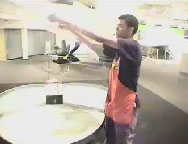 Students see and think about examples of bubbles occurring naturally and how they are created. The presenters demonstrate creating several types of bubbles and ask students lots of questions to increase their understanding of light, soap, bubbles, and more. Students predict the best way to make bubbles and what materials can be used to make them.
Students enjoyed this interactive program and learned about bubbles! One more tomorrow & then we’re done for this school year. Yeah!
Share this:

This & That
Here’s a collection of notes & thoughts….
- I’m about halfway through listening to the whole interview between Steve Jobs and Bill Gates at the D Conference last week. It’s great evening entertainment for those interested in technology. I caught a reference by Bill Gates to videoconferencing and looked it up. Microsoft is working on a teleconferencing product called RoundTable. Intriguing, but it seems to be designed for meetings and may not work well in a classroom setting. But might work for shared classes. Something to keep our eyes on.
- Did you know that TANDBERG has an education newsletter? Here’s a sample from my inbox and here’s how to subscribe. Enjoy!
- This is really cool from CSD’s blog. A parent wanted to find out about a museum they connected to so they could visit on their summer vacation! Isn’t that cool!! Content providers, you never know when you’re inspiring an actual visit to your museum!!
- Mark your calendar for Megaconference Jr. on February 21, 2008. You won’t want to miss it!!
- PBwiki came out with a new word-like editor this spring. Makes editing in a wiki a whole lot easier. Also, I’ve recently updated the list of collaborative projects on our collaborative VCs wiki. Lots of great examples of VC projects for your summer trainings!
- The New York Hall of Science has a nice set of bios on their presenters (explainers) on their blog. Check it out.
Share this:
Aquatic Ecosystems
 This afternoon Lincoln Elementary, St. Joseph, is connecting to Liberty Science Center for their Aquatic Ecosystems program. The program starts with a tour of the Liberty Science Center and the tanks they have with various aquatic ecosystems.
After an introduction of ecosystems, the students participate in an activity drawing an aquatic ecosystem from the side as if they were actually in it. The students’ drawings then lead into a discussion of the components of an ecosystem.

After discussing fresh and marine water ecosystems, students learn about the estuary and Hudson River where the Liberty Science Center is, and then they compared that estuary to where the St. Joseph River meets Lake Michigan. Note the green screen technology! Also look at the great images they shared of the St. Joseph River. It’s nice when the content provider can tailor to the local area too. They called the teacher ahead of time to find out what they were studying so they could tailor the program as requested.


Next, the students do an activity to look at cryptic camouflage and then try to guess what is hiding in several pictures.
This was our first program with the Liberty Science Center. While their programs are a little on the expensive side, the program is visually rich and can be tailored to exactly what the teacher needs.
Share this:

Content Providers Blogging…
What is it like to be an educator working at a zoo or museum or other organization and providing content to schools via videoconference? Well, now you can see what it’s like from the provider’s perspective and even give feedback; thanks to the power of blogging. I think great content providers have always had partnerships with schools, so this is just another way that we can learn from each other and share and reflect on best practices.
First the New York Hall of Science has a recent blog entry on training a new instructor including pictures from their side. Check it out!
And, many of us enjoyed the Iditarod programs and more from Kigluait Adventures this year. Richard and Christina are blogging at Teaching Wow. Take some time soon to read through the posts from this last year. I think you’ll find them very interesting and thoughtful.
Share this:
Blog Reviews & Video Clips of Content Providers
We’ve just added a couple new features to our VC Program Database linked on TWICE and Polycom. Now under the special searches on the left green bar, you can find all the programs that were reviewed by a blogging educator –  , or all the programs that we can find video clips for –
  . TWICE is planning to add more video clips this summer.
We’re collecting the links to blog reviews from all the people I know of that are blogging – see the Other VC Blogs linked on the right – scroll down a bit. If you’re blogging about VC and I don’t have your blog listed, please let me know!
On another note, while checking links, I noticed that the Battleship New Jersey has a new math program, What Good is a Parabola Anyway? It’s always hard to find a good math videoconference, and this one sounds really neat. I hope to have a teacher do this program next year.
Share this:

A Day in the Life of a Distance Learning Coordinator
Inspired by Arnie, Roxanne and Sandy, I thought I would write about a day of videoconferencing. So I picked a pretty busy day to record. If you are blogging too, pick a day yet this school year and tell us what it’s really like!
 7:30 a.m. River Valley participates in the first ever Literature Quest. I came in early and sat by my phone waiting for a call in case they had trouble. No phone call so they did great on their own!
8:00 a.m. Patrick Hamilton connects to the Buffalo Museum of Science. This connection didn’t go well and after a few minutes of struggling, I had the school dial directly to Buffalo and then I didn’t hear from them so they were fine!
8:30 a.m. River Valley’s second Literature Quest starts. Again they were doing it on their own. At about 8:40 I called the media specialist to see how it was going. Very well. We’ll probably modify the materials to include three presentations from each school. At the high school level it seems, based on this pilot, that a full MysteryQuest with six presentations can be done between two schools in an hour long class period. Good to know and we’ll continue to use this model to develop more programs.
9:00 a.m. Pat Ham finishes with the Buffalo Museum and Washington Elementary connects to them. With Washington El it worked fine on the bridge. I scramble to set up the distance learning room for an ASK program. Presets, tables, logo. Welcome panel participants.
 9:30 a.m. Sam Adams and Marcellus Middle School participate in ASK: Monkey Island with our panel of experts. We rescheduled to today so that Marcellus could participate. So now I’m facilitating and making sure the Buffalo Museum program is still going at the same time!
10:00 a.m. Washington El finishes with Buffalo Museum and Patrick Hamilton is back for another session with a different class. While facilitating the ASK program, I keep checking my bridge to see when Washington is done. Then I disconnect so Pat Ham can dial directly. Note: Later today I received an email from Washington Elementary with this feedback on their program with the Buffalo Museum of Science: “The vc went wonderfully. The kids really enjoyed it, and I liked that the kids were making good observations and deductions. It’s definitely one that I’ll recommend to our teachers.”
10:30 a.m. ASK Monkey Island finishes and I thank our panel members and walk them out of the building.
 11:00 a.m. Brandywine and St. Joseph High Schools connect to Global Nomads Group for their Pulse program on Muslim-Western relations. St. Joe’s camera was acting up so we had to reboot. Brandywine was connecting at 128K and we tried to resolved that but finally gave up. This program is led by David MacGuirt and is a facilitated dialogue with David posing questions and the students responding to the question, and then commenting on each others’ responses.
12:00 noon. Whew. Time for lunch.
12:30 p.m. River Valley’s last LiteratureQuest starts. On their own again. They did fine!
1:00 p.m. Catching up on email and phone calls. Arranging two more videoconferences. Helping a teacher in my online class. Answering a district tech coordinator’s questions about a grant.
2:30 p.m. Ottawa Elementary goes to the Bronx Zoo. For some reason in today’s connection I couldn’t call the Bronx Zoo, so I had to have them call me. But that was quickly resolved and we had a great program on Animal Colors.
3:40 p.m. Quick test call for Where in Michigan tomorrow.
4:00 p.m. Final videoconference reflection for the Kid2Kid Videoconference Class. We talked about what went well with their projects this year, talked about challenges – mostly related to technology and communication and talked about what other VC projects we have going on. It was a great debrief!
In between VCs today I worked on automating my final report for this year. It’s almost done!
So tell us about one of your days!
Share this:

Being Patient with Teachers
 One of the challenges of coordinating videoconferencing is what to do when teachers cancel or change their minds on doing a videoconference. While it can be very frustrating for those who have put in time scheduling, doing test calls, and all the preparation necessary, I think we have to step back and look at it from the teacher’s perspective.
Cancellation Reasons
They may not always tell us why they are canceling, but almost always it’s a very good reason. Family issues, health issues, school scheduling issues that they didn’t know about before, curriculum pressures…. these are all reasons why teachers cancel. They sign up thinking that it will work out, but when it comes right down to it, they can’t make it happen.
Sometimes, with a little patience and encouragement in discussion with the teacher, you can resolve the issue satisfactorily to salvage the program. But other times it honestly has to be canceled.
Reacting to Cancellations
In our early days of videoconferencing, I sent some strongly worded letters to teachers about canceling programs. Guess what? They’ve never done a videoconference since. What was I thinking?!! We don’t do that anymore. We can’t take it personally! We have to consider their point of view and be gracious and understanding!
Of course we want teachers to realize that scheduling is challenging, but teachers are really stressed and under a lot of pressure. If we add to that stress, we are teaching them that videoconferencing isn’t worth the trouble. We have to cut them some slack and work with them to resolve whatever challenges arise so that they will continue to participate and use videoconferencing.
What About You?
So how do you handle cancellations? Any advice? What tips do you have to help teachers work through challenges with a videoconference?
