
Learning about UDL

In the learning competency, I plan to learn about UDL or Universal Design for Learning. So I signed up for a workshop at MACUL to learn more about it. Here are my notes. 

This afternoon I’m participating in David Grapka’s workshop titled Universal Design for Learning (UDL) is Like Differentiated Instruction (DI) on Steroids!

What makes a UDL classroom? Having a welcoming environment. How do we advocate for all children? The way he modeled that is giving us his cell phone so we could text him questions!

“What we need is more people who specialize in the impossible”. Theodore Roethke

A vision of students today (scroll down) from Kansas State University. Look at their other videos too.  What resonated with you most as an educator and consumer?

For the rookies on UDL: Center for Applied Special Technology is THE place to learn about UDL. These videos explain UDL. After each video, David asked us what resonated with us.

Books mentioned:

UDL principle: Creating environments that work well for students with disabilities makes the environments work for everyone. Teachers rethink goals, methods and assessments.

From my seatmate, Cathy: Teaching Every Student in the Digital Age.

Example – a curb cut started out as an accommodation for wheelchairs, but skateboarders use it, people with strollers, luggage, etc. It helps everyone.

The handouts have a PowerPoint that compares UDL and assistive technology.

RTI: Regular Teacher Involvement; a whole school initiative

Brain Research video – three networks for learning – recognition networks (what), strategic networks (how), affective networks (why). Everybody learns differently.

UDL curriculum: multiple means of representation, multiple means of expression, multiple means of engagement, flexible tools, teaching methods and assessment.

He played each video twice! It was great because you got something new the next time around.  

There’s a serious disconnect between mandated state testing and new research on student learning and teaching.  Tomorrow David is addressing this in his 4 p.m. session.

——

After the break we looked at TRECenter.org Practices. This is what David does in New York. These materials can help you design your own UDL lesson plans.

How is a UDL lesson different than any other lesson plan? What I noticed includes:

  • The planning pyramid has “all students will…” “most students will…” “some students will…” “some other students will”
  • The unit includes modifications for meeting academic diversity.

This is a template for a UDL lesson/unit plan.

We did an activity using these sites:

Dialing Insanity is Here to Stay

Yesterday I spent some time talking to a sales engineer about how the new Polycom RMX bridge works. What I was most interested in is how the dialing works. The Codian and TANDBERG bridges use some variation of dialing and conference numbers depending on how they are configured. The new RMX is set up that way too. Polycom calls it an “ad hoc” conference bridge, although it can be work in a “scheduled environment” when installed with the ReadiManager SE 200.  This means the only bridge left that allows “direct inward internet dialing” (i.e. call an IP address and get dropped into the right conference) is the Polycom MGC. Please correct me if I’m wrong by commenting below. And if you’re reading this post, please check the comments for the full picture with potentially differing opinions!

Industry Trends
What I found intriguing to this conversation is the general trend of the videoconferencing industry.  A shift is happening from a centralized manager doing all the scheduling (a scheduled environment) to end users able to dial into the MCU/bridge and voila! their conference starts (ad hoc).

I think the other reason for this trend is a concern on the part of some vendors and security people regarding IP address dialing. My sense from reading the Megaconference listserv is that the education market isn’t too worried about this. But someone is, because I’m starting to hear from vendors that dialing IP addresses is a terrible thing. As that message gets to schools that don’t know any better, they’ll install solutions that create islands and difficult dialing.

Dialing History
We used to have ISDN numbers to dial, and they usually worked unless a 700 area code was involved. Then we had IP addresses, and many of us are pretty attached to that method of dialing. The new way is IP plus conference number or extension in some form. And some of us are having trouble adjusting to that. I’ve been fighting it and muttering about it for three years!  (see GDS Dialing, Dialing Insanity, Problems in K12 Dialing, etc. etc.)

Weird Dialing is Here; Now What?
Now that I realize the major players in the industry are all starting to use this IP plus conference/extension number dialing, I know I have to adjust my brain to it. Time to stop muttering. Time to instead think of solutions. So I’m starting to brainstorm some possible ways that we can help each other connect to each other. I’ve learned a few things already that I’ll share here now:

  • Gatekeepers strip off the ##extension if you try to dial IP ## extension. I thought it was just my Tandberg gatekeeper up till yesterday when I learned the Polycom V2IU does it too. Instead, the recommended method is to add extension@IP address to your address book and dial that way. This extension@IP address is called an NXO dial string.
  • Let’s say you’re trying to get a Tandberg endpoint to dial an IP ## extension to connect to a unit behind a Polycom V2IU. Make sure the V2IU is on the latest version. On the latest version you can use a feature called digit manipulation. The Tandberg can dial a * instead of a # and it will still connect.

I have a few other ideas simmering, so stay tuned. If you have any other ideas on how we can collaborate to make dialing each other less frustrating, please comment below. If you have any corrections to my notes here, please comment too!

ASK Author: The Ultimate Gift

This afternoon we have several classes participating in two sessions of ASK with author Jim Stovall on his book The Ultimate Gift. The students have prepared using the ASK process. This program is one of the Polycom Special Events, with bridging provided by Arnie Comer at Macomb ISD. The depth of questions and interaction is always incredible. Here’s a sample of the questions:

  • It seemed like Jason was blind to all the gifts he had. Did you do that on purpose?
  • Since it’s voting day in Texas, if you were president, how would you bring the gifts to the White House?
  • If you had one day left, what would you do?
  • How did you figure out the top twelve books in your book?
  • What is the worst problem you ever had and what did you learn from it?
  • Has being blind made any part of your life easier?

After the first session, I talked to one of our teachers who was SOOOO excited about the videoconference. She totally loved it! She said that her students thought Mr. Stovall was so nice and easy to talk to. In addition, she said the book and interview made a significant impact on the “troublemakers” in her class. They loved the book!

Polycom has offered this program every year for the last couple years, and probably will continue to do so. So watch their website for registration details. They have openings in other similar programs too.

Daylight Savings Time and the UK

Daylight savings time changes on Sunday in the U.S.! Did you remember?

It doesn’t affect our connections with Canada, because they switch at the same time we do. But it does affect connections with the UK (and Arizona). I have three with the UK that I have to adjust because I forgot (AGAIN!).

Life was a lot easier “way back when” we switched to daylight savings time at the same time as the UK! What was Congress thinking??!!

Yet another little detail that I have to keep paying attention too!!! How are you handling time zone changes these days?

Hungry Hungry Caterpillar

08-03-04caterpillar.jpgToday we have a kindergarten class participating in Hungry Hungry Caterpillar from the Camden Children’s Garden.

The program started off with the presenter asking the students several questions to help them realize that the videoconference is live and the presenter can see and hear them.

Next the presenter read the book Hungry Hungry Caterpillar. During the reading, the presenter asks the students lots of questions to get them involved and interacting.

Then the students learn about the life cycle, with many pictures and examples of different kinds of butterflies, different colors of eggs, different types of caterpillars. The session is short & sweet & very interactive for young attention spans. It’s also jam packed with great visuals to teach the concepts.

The Camden Children’s Garden is one of our favorite content providers this year!

Inventors from the Past

08-03-03inventors.jpgThis afternoon, students from Calvin Britain Elementary, Benton Harbor, are doing their first videoconference and presenting a series of skits and songs for other students in our county. The focus is on Black inventors from the past, particularly those from the 20th century.
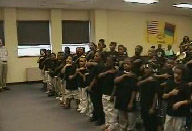
After a welcome from the principal, the students sang Lift Every Voice.

Next, the students performed a skit showing what life would be like if there were no Black people in the world. Each part of the day featured missing everyday items like the iron, the clothes dryer, the lawn mower, the auto gear-shift, the pencil sharpener, and the traffic light that were invented by African-Americans.

08-03-03inventors2.jpgThe students then all sang the song, We Shall Overcome, including actions to the song.

After this, the students gave some clues about some famous African-Americans in the form of “I am” statements. The listening students tried to guess the person.

This program was originally scheduled for the end of February, but a snow day made us reschedule for today.

The lesson for this interaction is posted online.

Mushing News from Bering Straits School District

08-03-03iditaproject.jpgThis week and next we have several schools participating in the IditaProject from Bering Straits School District. There are 30 schools participating this year, so the interaction is by emailed in questions instead of live interaction.
We learned about the stats on the race so far, looked at a map of where the race goes, and heard about the snow conditions. We watched some video clips where the students from BSSD had interviewed mushers and edited and produced the tape.

We got to see a surprise guest – Gary Paulsen! He told stories about the race and answered questions from students. He told about his first race and how he was sure, the whole race through, that he wouldn’t finish. And he finished 42nd!

A lot of the discussion in today’s program was about the difference between racing many years ago and now. The GPS units are especially controversial. The mushers aren’t supposed to use GPS to follow the trail – they are supposed to use a compass. And many of them have their favorite places to stop and rest, and other secret strategies. Having a GPS record it is very frustrating. Most of the mushers don’t like it. It was a very interesting discussion.

We’ll be back for the sessions on the 11th, 12th, and 13th. If you’re not an interactive site, you can still follow the streaming video and the discussion forums.

Motivating Teachers

One of the questions I hear all the time is, “How do you motivate teachers to use videoconferencing?”

Here’s an answer from one of my veteran RUS Grant videoconference coordinators. Linda Johnson is the librarian at Mars Elementary, a K-2 school with 361 students and 25 teachers. At this moment they have 43 student events scheduled for the 2007-2008 school year and I know that several more are in the works. So this school is quite successful.

That said, here is a comment from Linda in my class, Kid2Kid Videoconference Connections.

While trying to get my teachers interested in having VC Pals, I had to make a point to let them know I only wanted them to share things they already do. Many times when the students do their writings they share as a classroom but that’s it. By sharing during a vc, maybe the work will become more meaningful because they are sharing it with another group of students.

Linda is planning multiple pen pal connections with a school in Ontario, Canada, and so far they are going very well.

So, keep this in mind. Teachers are really busy! The curriculum is really jam packed! So whatever teachers do with videoconferencing, it has to meet curriculum goals and fit tightly into what they are doing.

How do you encourage teachers to use videoconferencing? and what strategies do you use to help them find and create VCs that fit their curriculum?

ASK Author: Belinda the Ballerina

Today we have two classes participating in Polycom’s Special Event ASK program with Amy Young. The students read Amy Young’s book Belinda the Ballerina and prepared for the conference using the ASK process.08-02-29belinda2.jpg

Amy Young started by reading the book to the students.

  • Did you take ballet?
  • Why did you give Belinda such big feet?
  • Why did the judges hate her and the customers loved her?
  • How many times have you been to Paris?
  • Why did you quit being a lawyer?
  • What is your favorite book of the ones you wrote?
  • Did your first job inspire your drawing or writing?
  • Who is your favorite author & why?
  • How do you make a lot of books?

08-02-29belinda.jpgStudents got to see both the draft of the writing as well as the draft of the drawings. This ASK program was unique in that Amy Young is both the author and the illustrator, so students could see the process from both perspectives.

The students also got to hear her new book, Belinda Begins Ballet.

08-02-29belinda3.jpgAmy also had a pair of Belinda’s shoes, which was really cool! The students were very impressed.

This was Amy’s first time doing the ASK program, and she loved it and so did the students! A great experience for everyone!

Snakes, Rattle and Roll

08-02-29rattle.jpgToday I have two classes participating in Tommy Bearden‘s Snakes, Rattle and Roll program. Tommy shared an interactive spot with us, and we have a view only school as well. I hear there are about 100 schools connected for this conference.

The first thing that stands out with this conference is the constant hiss/rattle of the snakes. They sound mad to me, but I haven’t met a rattlesnake before. Great experience for our kids!

Some of the questions were:

  • What happens if a snake bites another snake?
  • What makes the snake venom deadly?
  • How do snakes produce their venom?
  • Have either one of you (the handlers) been bit?
  • Have you even been scared that you were going to get bitten?
  • Which is the most deadly rattlesnake?
  • Do snakes see in color or in heat signatures?

08-02-29rattle2.jpgThere were 8 interactive schools, but the majority of the session was questions, so we were able to ask about 4 questions.

My absolute favorite question was, “We found a recipe for fried rattlesnake. Do you eat fried rattlesnake?” Unbelievably, one of the snake handlers really enjoys various rattlesnake recipes. Yikes! What a learning experience for us in Michigan!!

The audio was definitely an issue. It was hard to hear the presenters over the rattles unless they really shouted. You could hear them straining their voices. I wonder if placements of mics and/or wireless mics on the presenters would have helped. Or I wonder if any of the smart mics that get rid of background noise could have helped? Still it was a great experience for our students, one that wouldn’t be possible without videoconferencing.