Tag Archives: Content Providers

MAGPI / Constitution Center Election Program

Check out this program from MAGPI and the National Constitution Center:

ISSUES FACING PRESIDENTIAL CANDIDATES: A New Exchange Program from the National Constitution Center!

DATE: September 23, 2008

TIME: 1-3 p.m. EDT

TARGET AUDIENCE: High School Students

HOW TO PARTICIPATE:

In order to be an interactive videoconference site for this event, your site must have H.323 videoconferencing capabilities. Your site must also be connected to your national high speed research and education network (i.e. Internet2 in the United States).

DESCRIPTION:

The National Constitution Center is excited to invite your school to participate in the latest installment of its national student program, The Exchange: A Marketplace of Student Ideas. This event will take place on Tuesday September 23, 2008 from 1pm-3pm EDT. This installment of The Exchange, Setting the Student Platform 2008, asks students to consider the issues facing the presidential candidates in 2008 and work together to create a political platform for the nation’s students. This Exchange will follow up on the work done by students in May 2008 to create a student agenda. The discussion will be hosted by SuChin Pak from MTV and Dr. Michael Hogan from the Center for Democratic Deliberation and Pennsylvania State University.

The Exchange allows students all over the country to converse with one another about current constitutional issues using Internet-2 videoconferencing. It is an exciting way for students to explore issues with their classmates and peers in other parts of the nation.

Schools that participate in The Exchange will be asked to use the provided curriculum to prepare their students to be part of the conversation. Students will also have the opportunity to create and post their own media include art, video, and websites in The Exchange online community, which can be accessed from the National Constitution Center’s website at: http://www.constitutioncenter.org/ncc_edu_TheExchange.aspx. Some student created media may be selected to be displayed during the video conference. If your students decide to create any video or audio clips, we ask them to not exceed 2 minuets in length.

If your school chooses to participate in The Exchange, you will be asked to select one student to be part of the videoconference round table. During the videoconference, students will have an opportunity to interact with each other and share their thoughts on numerous issues facing the country. Students will use this deliberation to assess each issue, and create a student platform for the upcoming presidential election. Additionally, students who are not taking part in the discussion will be able to send questions and comments to SuChin and the participating students via a simultaneous online chat.

Participating schools must have connectivity to the INTERNET2 network and the ability to do H.323 videoconferencing.

While there is no cost to participate in this event, we do will ask schools to work to make sure this event is a success. Schools will be responsible for the following:

• Selection of student representative
• Preparation of students through the use of the provided Exchange curriculum
• Support student created materials and submit them to our new social networking site being developed for this project
• Participation and successful completion of videoconference testing prior to the event with the National Constitution Center

HOW TO PARTICIPATE:

I hope you are able to participate in this remarkable opportunity. If interested, please contact Jason Allen at either jallen@constitutioncenter.org or 215.409.6644 by September 12, 2008 for registration and information. Mandatory videoconference testing will be the following Friday, September 19, 2008.

Heather Weisse Walsh
MAGPI Applications Coordinator
3401 Walnut Street, Suite 233A
Philadelphia, PA 19104-6228
phone: 215-573-6417
email: hweisse@magpi.net

Training Hosts at the Canadian Space Agency

This morning at breakfast at the Elevate 2008 conference, I chatted with Marilyn Steinberg from the Canadian Space Agency. I commented that I heard their programs fill up quickly, so she described how they focus on quality, particularly how they train their “hosts” – the scientists and engineers who videoconference with the students. Her training program isn’t published or researched, however, Alberta Education is conducting a three year research project on their student programs.

I learned some really interesting things from Marilyn as she described their training program for their experts. Sometimes the best learning is in the conversations at a conference!

Components of the training

  • An annual 7 month training that consists of 2-4 hours a month
  • Three levels of training – beginning, intermediate, and advanced
  • Beginning focuses on room presence when presenting face to face
  • Intermediate and advanced include speaking the same curriculum language as students and teachers, body language in a videoconference, initiating a warm connection in the first 2.5 minutes of the connection, etc.
  • Pairing beginning and advanced presenters in the first face to face workshops at the Space Agency so the beginners aren’t alone

Lessons for communication
Marilyn shared some really important communication points for videoconferencing. I asked her how she learned them, and she said by observing. They’ve been doing videoconferences for quite a long time. So here are a few of her tips.

  • An early tip for their experts is how to engage with students and teachers who come to sessions on-site at the Canadian Space Agency. The experts learn not to turn their back to the audience – “only your spouse should admire your backside” – a humorous way to remember the lesson! Moving around instead of staying in one place to present requires the audience to multi-task and follow you.
  • Don’t point to the kid on the front row. Pointing is very aggressive. Instead, call on the student in the first row with a green shirt – with an inviting smile on your face and your eyebrows raised. The student will respond with a smile and you’ve engaged them and made a human connection.
  • Don’t break eye contact with the audience. She talked about how when you’re thinking, you might look down or up to the left. But this just makes you look really scary and shifty in a videoconference. Their presenters practice in the mirror and with each other in preparation for looking at the audience and not breaking eye contact. She described the results of this training in a session where the students are working in the room under the supervision of the remote host/scientist – and students just approach the microphone to ask questions of the scientist. Clearly the scientist is “in the room” in the students’ minds.

The scientists improve so much in their presentation skills that they come back from their conferences and comment on the poor quality of presentations done at their scientific conferences. They’ve learned so much they’ve become critical consumers of presentations.

Curriculum Connections
The other part of her training program is in depth learning about the curriculum requirements of the schools. The scientists and engineers learn how to use the same language that the students are using in their scientific curriculum. This is so critical! How many poor expert presentations have you seen? Marilyn commented that they are “talking to themselves”, which I thought was pretty funny because it’s so true!

Assessment
A really brave (in my opinion) component of their training is annual assessment. This isn’t just a three year training where you just walk through the workshops and then you’re done. Each year they assess the experts to see what training they need to focus on for that year. The training is tailored to their needs. She didn’t describe how they did the assessment, but this seemed really brave to me. How many guest experts would be willing to go through this? Yet, clearly they are able to get past the initial hesitancy of their engineers and scientists to the point where they value and appreciate the training. They come back and say this interaction with the kids is their favorite part of their job because of the positive feedback they receive.

I look forward to future publications and presentations of the great work that the Canadian Space Agency is doing!

Summer School Goes to Alaska

This afternoon our Blossomland Learning Center summer school special education students are connecting to the Alaska Sea Life Center. Laurie, the presenter, did a great job working with the students, who live with several different challenges. The students put stickers on a picture of the ocean, tidepool, and shore to show where the different animals live.

Laurie asked them lots of questions, showed many different types of animals who live in the ocean or the shore, and had the students act out some of the concepts – such as an anemone catching a fish.

Did you know that the content providers such as the Alaska Sea Life Center are happy to work with you to accommodate the learning needs of different students?

Two Successful Jazz Sessions

So, how is your summer going? Going, gone? Feels like that to me.

Last week we participated in the second successful Jazz workshop of the summer. If you’re not familiar with this workshop, visit the website.

The participants and facilitators really enjoy the process of immersion into videoconferencing in the curriculum.

Some features from this summer’s sessions include:

How did your professional development sessions go this summer?

Natural Dyes with the Cleveland Museum of Art

IVC Showcases have been going on all day today at NECC 2008 and they’ve been mostly packed! I couldn’t get into the Rock and Roll Hall of Fame one, so you can get a flavor of the popularity of the IVC sessions at NECC this year. Why are they just on one day?

In The Cleveland Museum of Art‘s program, we participated in their new program on Natural Dyes. The participants colored a bookmark using spinach, just like we did in Jazz two weeks ago. I’ll add a couple pictures here from the Jazz workshop so you can see what it’s like:

Here’s a new thing! Someone asked how to get access to the programming if they don’t have access and CMA answered that they’ve done their programs with tools such as Skype etc. So they are willing to work with you on getting access to their programs. Cool!

Pro Football Hall of Fame

I’ve muttered before about the lack of good options for high school teachers for videoconferences. But today I have a quick report from a teacher who did the Careers in the NFL program from the Pro Football Hall of Fame on Tuesday. I didn’t get to see it because I was facilitating our veterans interviews. However, I got this report:

I thought the program was excellent. It was very interactive and the students really enjoyed it. My marketing class is full of senior boy athletes which I think made a difference, since the focus was on football. However, he talked a lot about careers that many of my students showed interest in.

I would definitely do this again…especially next year in my sports marketing class!!

This is good news! It was our first connection with the Pro Football Hall of Fame. Their programs are VERY reasonably priced, and they can be scheduled by request! Perfect for middle and high school schedules!

Have You Thanked Your Favorite Content Provider Lately?

A few weeks ago, a teacher shared with me the student learning from a videoconference in January. She still remembers and the students keep talking about the videoconference they had with The Cleveland Museum of Art. So I forwarded it on to Dale Hilton.

Do you know how much the content providers appreciate hearing from us? You remember that they aren’t making money on us, right?! Even for the content providers that are breaking even, they still aren’t able to use the funds to pay the staff who run it.

So, that bring me to today’s question. Have you thanked your favorite content provider(s) lately? Have you let them know the difference they are making for your students? They can use that information to keep their program going, to let their boards & decision makers know the value of the programming. So, thank them!!

zwani.com myspace graphic comments
Graphics for Thank You Comments

Diving the Reef HQ in Australia

This evening Upton Middle School students are connecting to the ReefHQ in Townsville, Queensland, Australia.

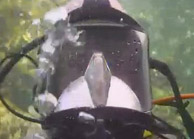
We started by the students taking a deep breath to go diving. The diver explained how his mic & breathing system works. Then he gave the students a tour of the reef, showing and explaining the coral reef. He showed different corals and asked the students to guess the name of the coral (brain coral, honeycomb coral, etc.)

The excitement in the room was palpable. All of us were exclaiming to each other how cool this is! A custodian walking by came in to watch for a while.

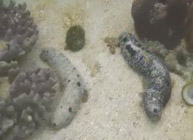
We laughed at a sea cucumber that breathes through it’s bottom. We learned about creatures living on the sand, and more in the lagoon. During the tour, we asked a few questions too. We were able to watch a starfish retract it’s stomach too.

Next the diver switched over to the shark tank. During the switch, Julie, the reef guide, asked the students questions to review what they had learned so far. We found out that the coral reef exhibit is 37 m long and 4.5 m deep and holds 2.5 million liters. The shark holds about 750,000 liters. We chatted about the movie Finding Nemo and how it corresponds to real life.

It was great to watch the diver swim with the sharks and get close up views of the different types of sharks in their predator tank. We met so many different sharks and fish, including one that likes to nibble the camera.

The students thought the video was incredibly good (we connected at 384 K at H.264). A green sea turtle enjoyed a scratching on its back and came to say hello.

This was a great experience, and I’m sure we’ll be doing it for an after school evening activity again!