Tag Archives: Collaborations

Negotiating a Time and Date

by zoutedrop on Flickr

Have you had a videoconference collaboration fail because you couldn’t nail a time and date?

Have you ever participated in an email exchange that went like this?

Email: “Hey, when do you want to do our videoconference?”

Reply: “I can do it anytime.”

Reply: “How about Monday?”

Reply: “Sure, what time?”

Reply: “10:05-10:45 is best for me”

Reply: “Ok that works for me. ”

Later reply: “Oh what time zone are you in?”

Reply: “EST”

Reply: “Oops that’s 8:05 my time. I can’t do that time.  My kids aren’t in school by then.”

9 emails later. Now you have to start ALL OVER again! In the meantime, a week has gone by and you’re past the curriculum that you wanted to cover in this videoconference, so you decide not to do it.

How about this exchange instead?

Email: “Hey, when do you want to do our videoconference? I could do any Monday  between 10:00-12:00 EST (my time) / 8:00-10:00 MST (your time)? I’d like to do it before December 8 if possible.  Can you fit that in your schedule?

Reply: “Sure, I can do Nov. 23 at 9:00 MST / 11:00 EST for an hour.”

How many emails do YOU want to spend negotiating the time and date for your VC?

Take the initiative and suggest some dates & times!!!

Monster Match and Other Halloween Themed VCs

This has been a Halloween themed week of videoconferences. It was our first busy week since October state testing ended. Here are the programs we enjoyed:

Monster Match

09-10-30blob1
This monster's name is "The Blob."

09-10-30blob2We had 21 classes participate in Monster Match with Region 12, and 1 class do Monster Exchange with Dallas ISD. Be sure to read more about how Region 12 runs Monster Match here, here, and here. There are other methods of doing this project – see Dallas ISD and Humble ISD‘s pages. I noticed a lot of Monster Match copycat projects in CAPspace too.

Scary Art

We have an 8th/9th grade art teacher that annually participates in Scary Art with Arielle at The Cleveland Museum of Art. Paintings not for the faint of heart! The class that participated this year was a drawing/painting class and the program fit well with their studies.

Dia de los Muertos

A 6th grade Spanish class (teacher was a Jazz 09 grad) had 3 classes participate in the new Dia de los Muertos program with the Cleveland Museum of Art. It’s a “special request” program not even on their listing. The presentation could have been in all Spanish, but ours students weren’t ready for that. So we had partial Spanish, mostly English. The program includes an art project making a skeleton. Students really enjoyed it and learned all about the celebration.

Boo! I’m a Bat!

A preschool class connected to the Cleveland Zoo for their Boo I’m a Bat presentation, led by an educator in a witch costume. Students learned all about bats.

Day of the Dead

Tommy Bearden invited my schools to participate with his national audiences for a Day of the Dead all day celebration. I wasn’t able to get anyone to sign up soon enough to actually present, but I have 5 high schools connected all day with Spanish classes rotating in and out watching throughout the day.

halloweenslimetimeHalloween Slime Time

Finally, I have a first grade class that every year participates in Halloween Slime Time on the states of matter with the Ann Arbor Hands-On Museum. This is a great program with hands-on experiments for each pair of students. Highly interactive and visually appealing!

Next…

Next week we move into our ASK programs with ASK Specialist: Stellaluna, interviewing bat experts at Cranbrook.

So have you done any of these VCs or similar ones? Please share and comment on your experience/recommendations…

Monster Match and Other Projects as Professional Development

I’ve been thinking the last couple of months about professional development on videoconferencing. I had a nice line-up of face to face, online, and via videoconferencing workshops this fall for my schools. But since our 3 year RUS grant is over, the pressure is off to meet the PD requirements of the grant. That factor, plus the uncertainty of budgets, MEAP test stress, etc., means that I have little to no registrations for my fall professional development sessions.

09-10-29monster1So, how are my teachers continuing to learn and improve their VC practice? By doing actual videoconferences! I’ve noticed that I have several new teachers signing up for programs this year. They don’t seem to feel the need for any official / formal professional development on how to use videoconferencing in the curriculum. They are learning as they go!

As I’ve watched the Monster Match sessions this week, I have realized that carefully and well-designed VC projects can provide professional development for teachers. What are they learning in Monster Match?

  • How to effectively compare similarities and differences with venn diagrams
  • How to zoom the camera in on their monster
  • What a wiki is and how to use it (pasting their descriptions)
  • How VC can help students learn about different areas (like TX students asking our students about the color of the leaves to supplement their seasons unit)09-10-29monster2
  • How to prepare questions for their partner class

So I’ve been thinking about this more. What if we deliberately designed mass projects like Monster Match and others to teach teachers how to teach 21st Century Skills, specific instructional strategies like Marzano’s research based strategies, specific effective methods for meeting state standards, thinking skills (i.e. Linda’s projects) etc. Obviously we can’t do all PD this way, but could we make a bigger dent in that direction by carefully designing our projects to meet curriculum and professional development goals? What do you think?

MoNSteR MaTcH Day 1

Today is our first day of MoNSteR MaTcH 2009 with Region 12. I have 22 classes participating this year. The H1N1 virus has already made us reschedule two of the conferences, but we’re rolling with the punches!

09-10-27venn
Classes zoom in to share and compare their venn diagrams.

This year, Roxanne added a Venn Diagram procedure for comparing similarities and differences between the classes. I’ve noticed that the schools are also muting to consider the differences, which gets more students thinking about what is the same and different. The quality and length of comparing is much higher this year as well. I think this addition has strengthened the thinking/learning quality of Monster Match.

Here are some of the pairs from the connections today. These pairs are done by two fourth grade classes:

Monster Match Monster Match

09-10-27match4th-309-10-27match4th-4

These pairs are done by two fifth grade classes:

09-10-27match5th-109-10-27match5th-4

09-10-27match5th-209-10-27match5th-3

One of the classes created a little decorated paper curtain to hold in front of their monster until it was time to reveal:

09-10-27match5th-curtain

These last pictures are from a 1st grade / 2nd grade pair.

09-10-27match1st-109-10-27match1st-2

09-10-27match1st-309-10-27match1st-4

What a great day of learning and sharing! Three more days of Monster Matches to go!

Links for Tech It Up 2009

Greetings to my Tech It Up International 2009 audience in British Columbia! Here are some resources we’re using in my sessions today.

Designing Quality Interactive Classroom Projects for Videoconferencing

Resources for Collaborations

Berrien RESA Collaborations

Collaborations Around the Planet

Read Around the Planet

Enriching Your Curriculum with Interactive Videoconferencing

TWICE Information
Berrien RESA Resources

More Information

Guess My Pet with Wales, UK

Wales PartnersThis morning Bridgman Elementary is connecting to Wales in the UK for a project that was written in the Jazz workshop this summer: Guess My Pet. Before the videoconference started, I noticed the teachers using best practice to set presets on their visuals (which were neatly mounted to hold them still). Nice to see Jazz lessons being put into practice.

Each class had little introductions ready to share to get to know each other and where they are. Then the classes began sharing the clues about their pets. Everyone took notes on the clues; then the classes muted for a while to guess. here are some examples of the clues:

  • It’s got long or short hair.
  • It makes a squeaking noise.
  • It lives in a cage.
  • It runs on a wheel.

Pet DrawingAfter guessing, the classes shared pictures and facts about their pets. The classes also shared a graph of what types of pets they have represented in their class. Pet Graph

We had a few technical glitches along the way, but overall the students enjoyed the process, practiced their reading, listening, and presenting skills, and got to know students in another country! The classes plan to continue the partnership with pen pal letters between students.

Eco-Conversations: Water Bottles

Today Buchanan Middle School has four Eco-Conversations connections, two with the UK (Wigan and Torfaen), one with Ontario, and one with Texas. Our focus for these sessions has been on water bottle pollution.

Our class prepared posters explaining the effects of water bottle pollution, including pictures of the local environment. The classes have been collecting water bottles to recycle and they have a mattress bag full of water bottles.

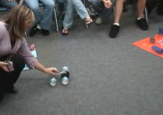
Eco-ConversationsThe first session was with a school in Wigan, and they told us about their recycling program. The real learning in this connection happened in the question and answer time. For example, the two classes shared where they have access to recycling. In Wigan, they can recycle all kinds of things including clothes and shoes at the supermarket. We don’t have EcoConversationsthat in our area – mostly just plastic recycling at the grocery store. Another question from our class was, “Do you think our accents sound different?” which started a discussion of how we sound different to each other. Our class also showed a toy car made out of water bottles and an RC engine. The students in the UK loved it.
Our second session was with a school in Torfaen, Wales. Both teachers in this session are graduates of the Jazz workshop. Our class shared an introductory PPT about their community with pictures etc. EcoConversationsOur partner class had posters and pictures to talk about recycling and reducing their carbon footprint, complete with footprint notes. They talked about the costs of water bottles, and the lack of fluoride in bottled water for young children’s teeth and bones as well as other environmental issues. Their eco club told us a story of correcting their principal in his use of electricity. “I was shamed in front of the school,” he said! Everyone is learning together to reduce their consumption. Then our class had each group share their posters about water bottle issues and the water bottle pile and toy. Then the class in Wales asked our students questions. Both classes asked each other about their sources of information. Our friends in Wales have required recycling, but we don’t know of anywhere in the US that has a law that everyone has to recycle. We learned about “Dan the Can” and the students drew and colored pictures of him and brainstormed some other possible projects between the classes. Eco Conversationswe found out that it’s free to recycle in the UK, but we have to pay extra to recycle. Our partner class started their eco club 4 years ago and won this flag for their work in the community, planting trees, educating others, showing how they are saving energy, etc. They are understandably very proud of their flag!

Our third session was with a class in Barrie, Ontario. Both classes shared presentations with each other. The class in Barrie surveyed the students in the school and found that the students thought bottled water tasted better. Then they did a blind taste test and they preferred the tap water! They included both US and Canada stats in their presentation and had Recycle Bingreat pics to illustrate their facts. During Q&A time the classes ask each other several questions that had a show of hands: how many drink tap water at home? how many recycle water bottles? how many like water bottles? It was a great way to compare and see how well the students at both classes were applying their learning. The class in Ontario showed us their recycling bin too.

Our fourth class connected to McGregor, TX. They had lots of great facts and issues about water bottles including the amount people spend on water bottles, the issues of BPA plastic, etc. The students really enjoyed sharing, and our teacher shared with the TX students some of what we learned from the other classes this morning.

We have one more section that is connecting to a class in British Columbia in November after our state testing is done. This project has again been a great experience for our students!

Upcoming Online Classes

Are you new to videoconferencing (Skype or H323?) Want to improve your support of videoconferencing in your school?

Take one of our popular online classes. Videoconference assignments are included in both classes.

Past participants have said:

“As a media specialist, I think this course would be extremely useful for my teachers and staff.”

“This is actually the first on-line course I’ve taken, and I am quite impressed. Obviously you’ve put much time and thought into these materials and methods. I got a number of good ideas and insights from the other participants’ postings and replies to posts. Discussion of this type is a key to understanding and internalizing new information.”

“The information presented was all very useful. The contacts made with other schools around the country will be a very valuable resource to tap in the future as will some of the content provider sites.”

Hope you can join us!

Standardizing Projects: Evaluations

Still continuing the discussion on project work flow. Since I did quite a bit of thinking on evaluation in July, I’m convinced I should add evaluations to all of my projects and improve the evaluations in the current projects. They can’t be too long, but they do need to collect some important information. See what you think of this list:

Evaluating the Process

  • Registration
  • Materials (did you use them; were they helpful?)
  • Facilitation (if applicable)
  • Communication re the project
  • Would you recommend the project? / Participate again?
  • What else?

Evaluating the Learning

  • Did your students’ communication skills increase as part of this project? (ISTE NETS standard #2)
  • Did your students’ collaboration skills increase as part of this project? (ISTE NETS standard #2)
  • Did your students [insert expected curriculum outcome here] understanding increase as part of this project?
  • Did you & your students learn from the other class? (yes/no & comments)
  • What else?

And of course, always ask for additional comments.

Your Turn: Do you evaluate your projects? What do you include in the evaluations? My evaluations have been in FileMaker Pro or Zoomerang, but I’m switching to GoogleForms for this next year due to quicker summaries. What tool do you use?

I think this is the end of the project work flow discussion. Did I miss anything? Now it’s time to start tackling the prep for my fall projects!

Standardizing Project Email Confirmations

Still continuing the discussion on project work flow. Let’s think now about confirmation letters. What should be in the project emails? I send at least three: a confirmation, a preparation reminder, and a test call reminder. I want to start adding the post email letter that includes the evaluation link.

To make this list, I looked at my MysteryQuest confirmation templates, my individual teacher project confirmation letter format, Down in the Deep confirmations, and Read Around the Planet emails.

Confirmation Letter

As I work through this list, I think it’s time to tighten up my confirmations so they aren’t so long & wordy — that’s Roxanne‘s influence and wisdom!

  • Project title, date & time
  • Test call date & time & connection details
  • Preparation information
  • Action Items: what to do next

Other optional components:

  • Information about recording and video releases (if applicable… I’ve been trying to record more to get examples to put online)
  • Contact information for partner teacher (for exchanges)
  • Suggested agenda (if not already determined/facilitated)

Test Call Reminder

Sometimes I combine the test call and preparation reminders.

  • Project name
  • Test call date & time
  • Connection info: IP, dial direction, trouble # to call

Preparation Reminder

Not all projects get a preparation reminder. MysteryQuests do for sure. Lots of reminders about presentation preparation and teachers really appreciate that!

  • MysteryQuest projects: don’t forget to send in your city-state / city-country / history-mystery
  • MysteryQuest projects: Tips on making clues, presenting clearly, making sure all the clues are included, a reminder to make a visual for revealing the answer
  • Encouragement!!
  • What else?

Post-Project Email

  • Thank you for participating
  • Stats on the success/participation
  • Link to evaluation form
  • What else?

By the way, if you’re reading this project work flow discussion and you don’t run any projects for your school(s), are you getting inspired?! I hope so! Remember Linda’s 3 questions for your teachers!

Your Turn: What do you think? Anything missing? What info do teachers need? What is too much? Where is the best balance? Content providers reading this – what do you think makes a good confirmation email? Do you do reminders? What do you include?